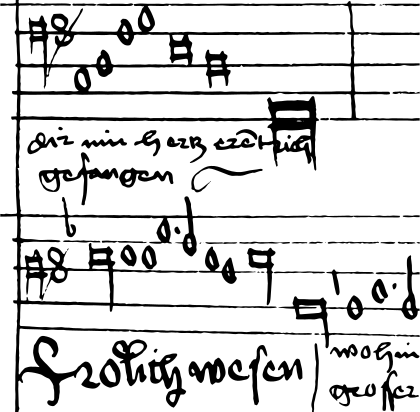
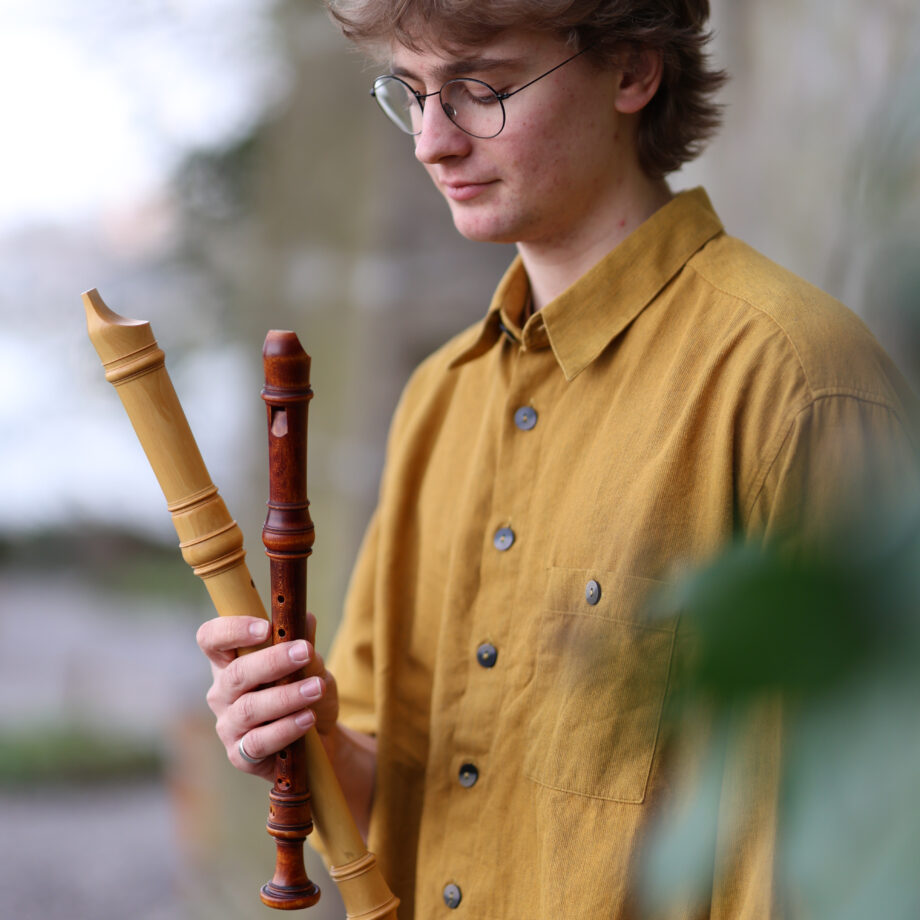
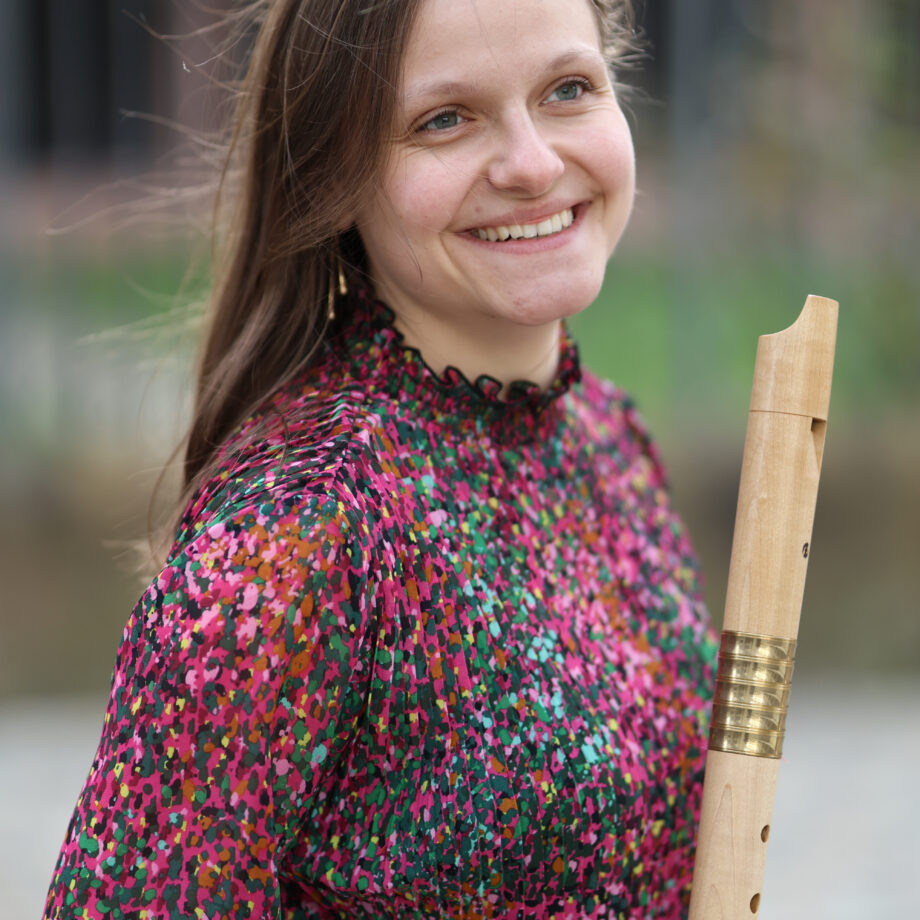
t the Burgundian court of the fifteenth century, it was already customary to render chansons – music conceived for the voice – on the recorder. When the Parisian printer Pierre Attaingnant published his 27 Chansons musicales à quatre parties in 1533, he both preserved and refined this practice, singling out certain pieces as especially suited to transverse flutes, others to recorders.
In April 2021, a traverso consort presented the first half of this collection at ReRenaissance, with the tacit promise that a recorder consort would one day complete the arc. Now, five years later, that promise is fulfilled, though not without expansion: alongside vocal and instrumental chansons, the art of dance also claims center stage.
Attaingnant’s prints, as well as those of his widow Marie Lescaloppier, abound in bransles, pavanes, galliards, basse danses, and tourdions – each with its own distinct temperament. From this abundance emerges a miniature theatrical universe in which prince and peasant, fool and doctor, knight and shepherd make their appearances. Newly devised choreographies, drawing on the movement language of sixteenth-century France, set the music quite literally in motion.
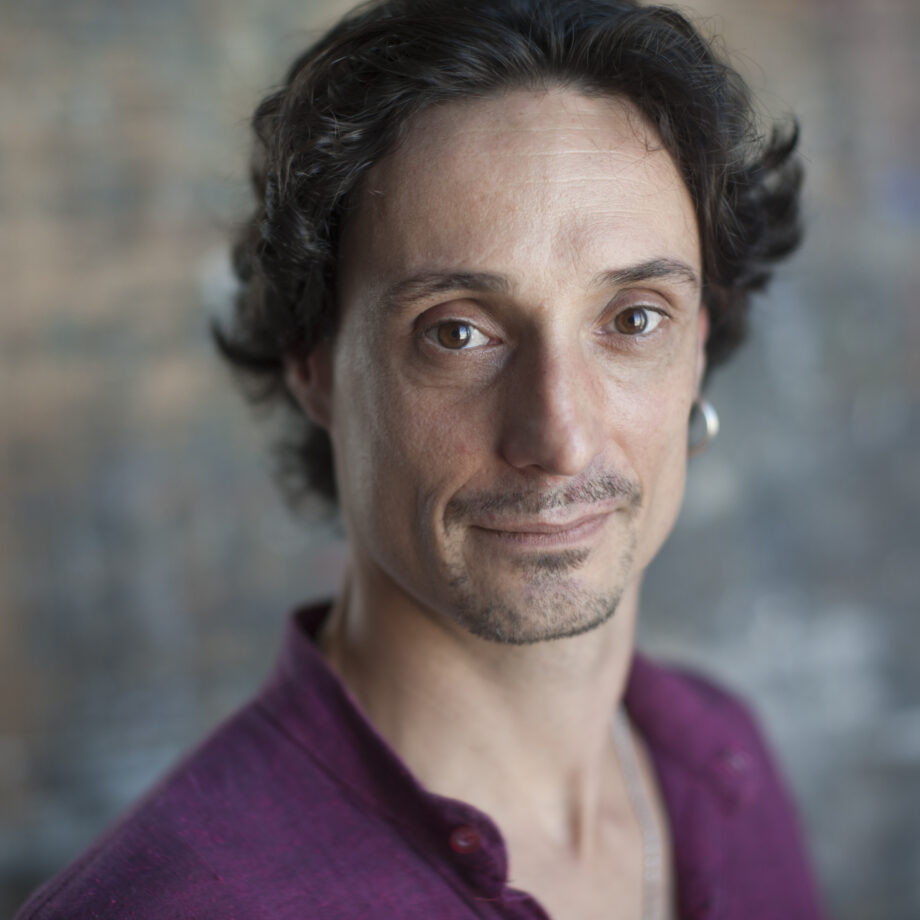
Hubert Hazebroucq – dance
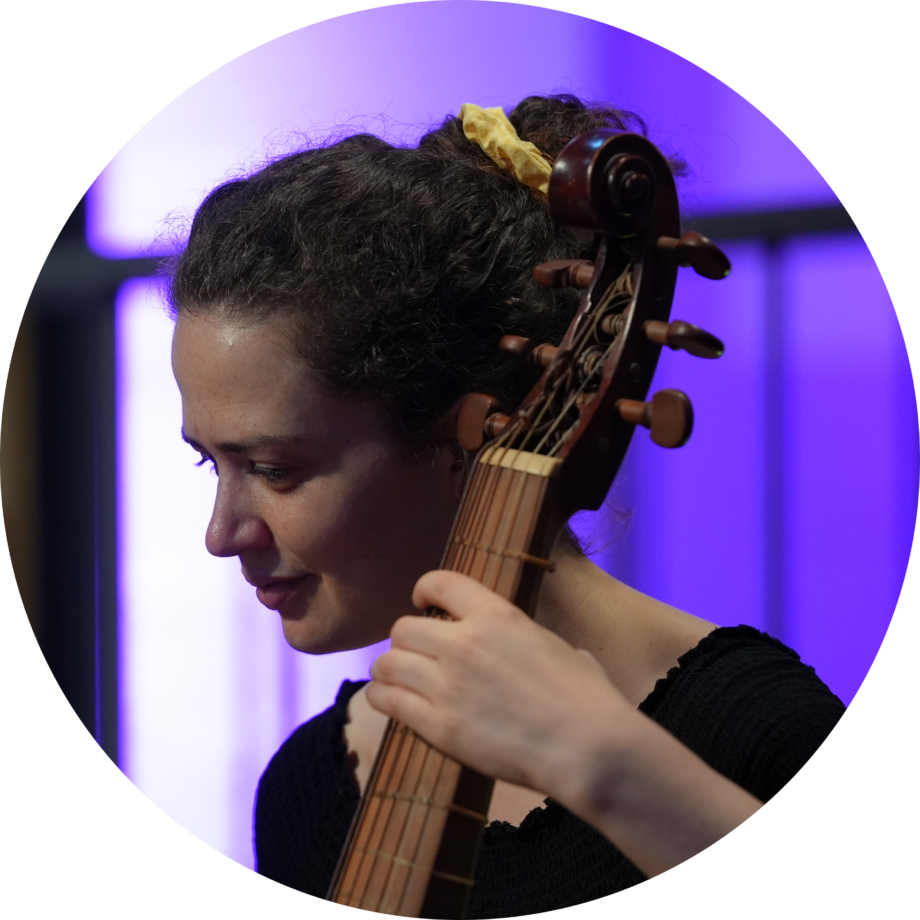
Emma-Lisa Roux – lute, voice
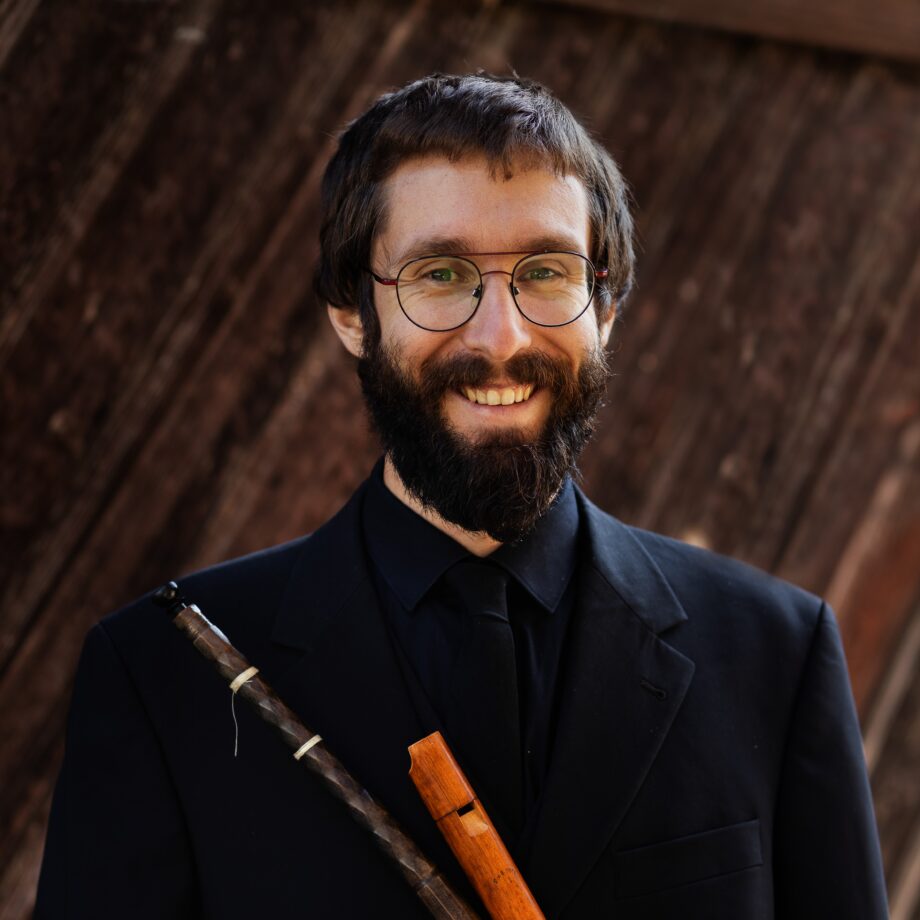
Marc Pauchard – recorder
Mirko Schacht – recorder
Siri Löffel – recorder
Tabea Schwartz – recorder; direction
Free entry – Collection
Saturday, 30 May 2026, 18:15
Klosterkirche Dornach, Amthausstrasse 7, 4143 Dornach
Sunday, 31 May 2026, 18:15
Barfüsserkirche, Historisches Museum Basel
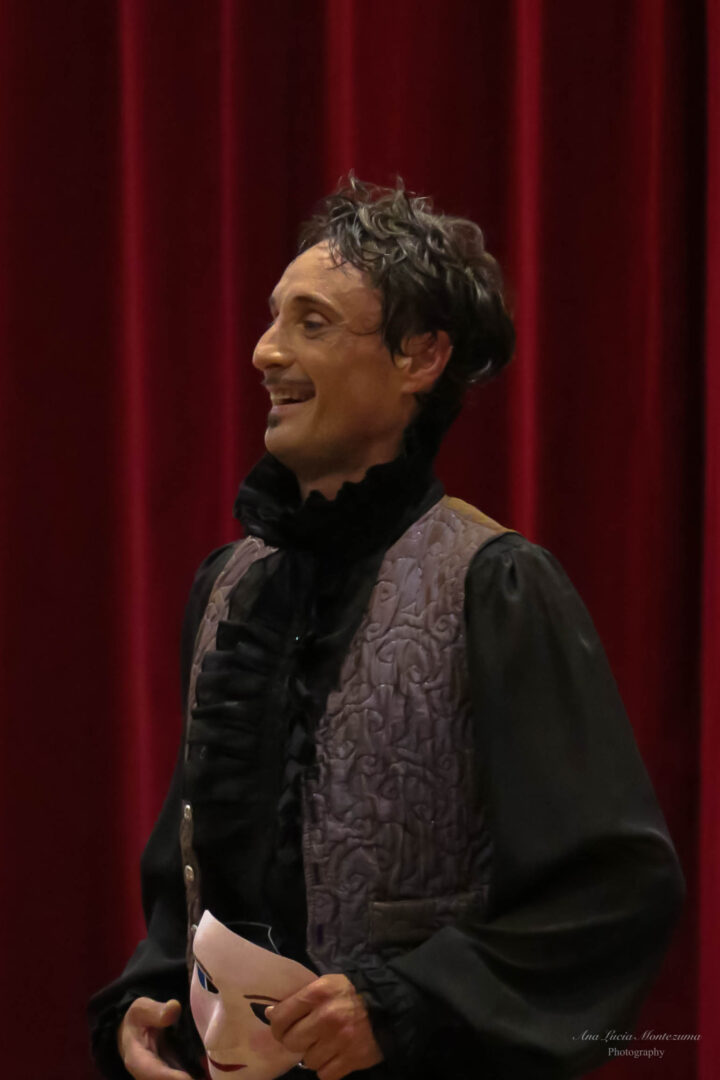
Hubert Hazebroucq. Photo: Ana Lucia Montezuma
Trailer
I’ll be there
by David Fallows
Pierre Attaingnant stands as one of the great pioneers of music printing in the sixteenth century, having issued over fifty sets of partbooks, mostly of songs in four voices. His publications never matched the beauty of Petrucci (to whom various earlier ReRenaissance concerts have been devoted) let alone the peerless Peter Schöffer the younger (who has already been the theme of one concert and deserves more very soon). To compensate, he pioneered a single-impression technology (in the general view: quite a few of us think it was pioneered in London by John Rastell), which made the entire production process far quicker and far cheaper, becoming the most common means of music printing for well over a century thereafter.
This concert is devoted to pieces printed by Attaingnant but including newly designed choreographies for many of them, offering a new view of sixteenth-century music.
1 Pavane «La Venißienne» – anonym
Second livre contenant trois gaillardes, trois pavanes, vingt trois branles […], («Second livre de danceries»), Paris: Pierre Attaingnant, 1547, fol. 1v–2r
Le Prince
2 La Volunté – Pierre Regnault dit Sandrin (c1490–c1560)
Quatorzieme livre contenant XXIX chansons […], Paris: Pierre Attaingnant, 1543, fol. 6r
3 Basse danse «La Volunté» & Tourdion – anonym
Second livre de danceries, fol. 5v–7r
Le Berger
4 Au joli bois – Pierre Moulu (c1480–c1550)
Trente et une chansons musicales, Paris: Pierre Attaingnant, 1529, Nr. 7
5 Bransles de Poictou – anonym
Cinquiesme livre de danceries, Paris: Pierre Attaingnant, 1550, fol. 8v & 11r
Le Charlatan
6 Et dont venés vous, Madame Lucette? – Pierre Moulu
La couronne et fleur des chansons a troys, Venedig: Antonio dell’Abbate, 1536, fol. 12r
7 Almande «Et d’où venez vous, Madame Lucette?» – Claude Gervaise (1505–1555)
Troisieme livre de danceries […], Paris: Marie Lescaloppier, 1556, fol. 20v–21r
8 Sauterelles – anonym
Dixhuit basses dances garnies, Paris: Pierre Attaingnant, 1529, fol. 23v & 29r
L’Ivrogne
9 Troys jeunes bourgeoises – Guillaume Le Heurteur (fl. 1530–1545)
Vingt et sept chansons musicales, Paris: Pierre Attaingnant, 1533, fol. 11r
10 Tourdions – anonym
Second livre de danceries, fol. 7v–8r
Le Chevalier
11 Amour me poingt – Claudin de Sermisy (c1490–1562)
Vingt et sept chansons musicales, fol. 5r
12 Pavane de la Guerre & Galliarde de la Guerre – Claude Gervaise
Troisieme livre de danceries […], fol. 5r & 7r
Le Fermier
13 Beure frais – anonym
Dixhuit basses dances garnies, fol. 27r
14 Bransles de Champaigne – Claude Gervaise
Sixieme livre de danceries […], Paris: Marie Lescaloppier, 1555, fol. 13v–15r
15 Gentil mareschal – Pierre Passereau (c1509–1547)
Vingt et sept chansons musicales, fol. 3r
La Dame
16 La Magdalena – Pierre Blondeau (c1490–c1550)
Neuf basses danses […] avec quinze galliardes, Paris: Pierre Attaingnant, 1530, Nr. 6
Dixhuit Basses dances garnies, Paris: Pierre Attaingnant, 1529, fol. 1r
17 Les yeulx bendez – Pierre Vermont (c1495–1558)
Vingt et sept chansons musicales, fol. 4r
Le Fou
18 Mirelaridon – Guillaume Le Herteur
Vingt et sept chansons musicales, fol. 1r
19 Bransle gay – anonym
Cinquiesme livre de danceries, fol. 4v
L’Italien
20 O passi sparsi – Sebastiano Festa (c1490–1524)
Canzoni frottole et capitoli, Rom: Pasotti & Dorico, 1526, fol. 7r
Chansons musicales a quatre parties, Paris: 1533, Pierre Attaingnant, fol. 2v
21 Pavane passemaize – Claude Gervaise
Sixieme livre de danceries, fol. 1v–2r
22 Pass’emezzo d’Italie – Giorgio Mainerio (c1535–1582)
Improvisation nach: Recueil de danseries […], Antwerpen: Pierre Phalèse, 1571/1583, fol. 2r
La Danse du Monde
23 Galliarde [de Passemaize] – Claude Gervaise
Sixieme livre de danceries, fol. 1v–2r
24 Galliarde 10 & Galliarde 1 – anonym
Neuf basses danses […] avec quinze galliardes, fol. 13v & 11r
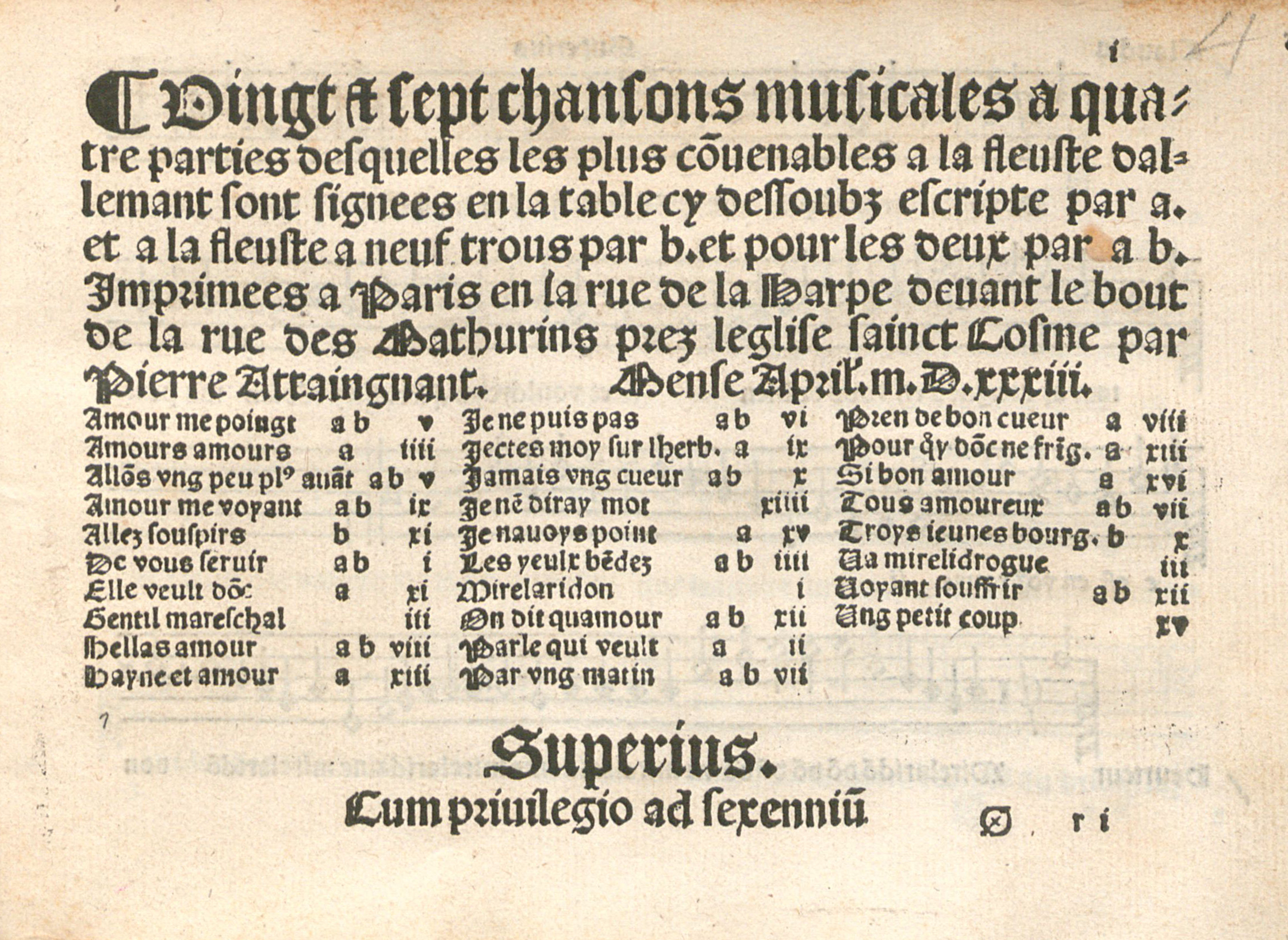
Titelbild der «Vingt et sept chansons» von Pierre Attaingnant (Paris, 1533) mit den Zuschreibungen für Traversflöte «a» und Blockflöte «b»
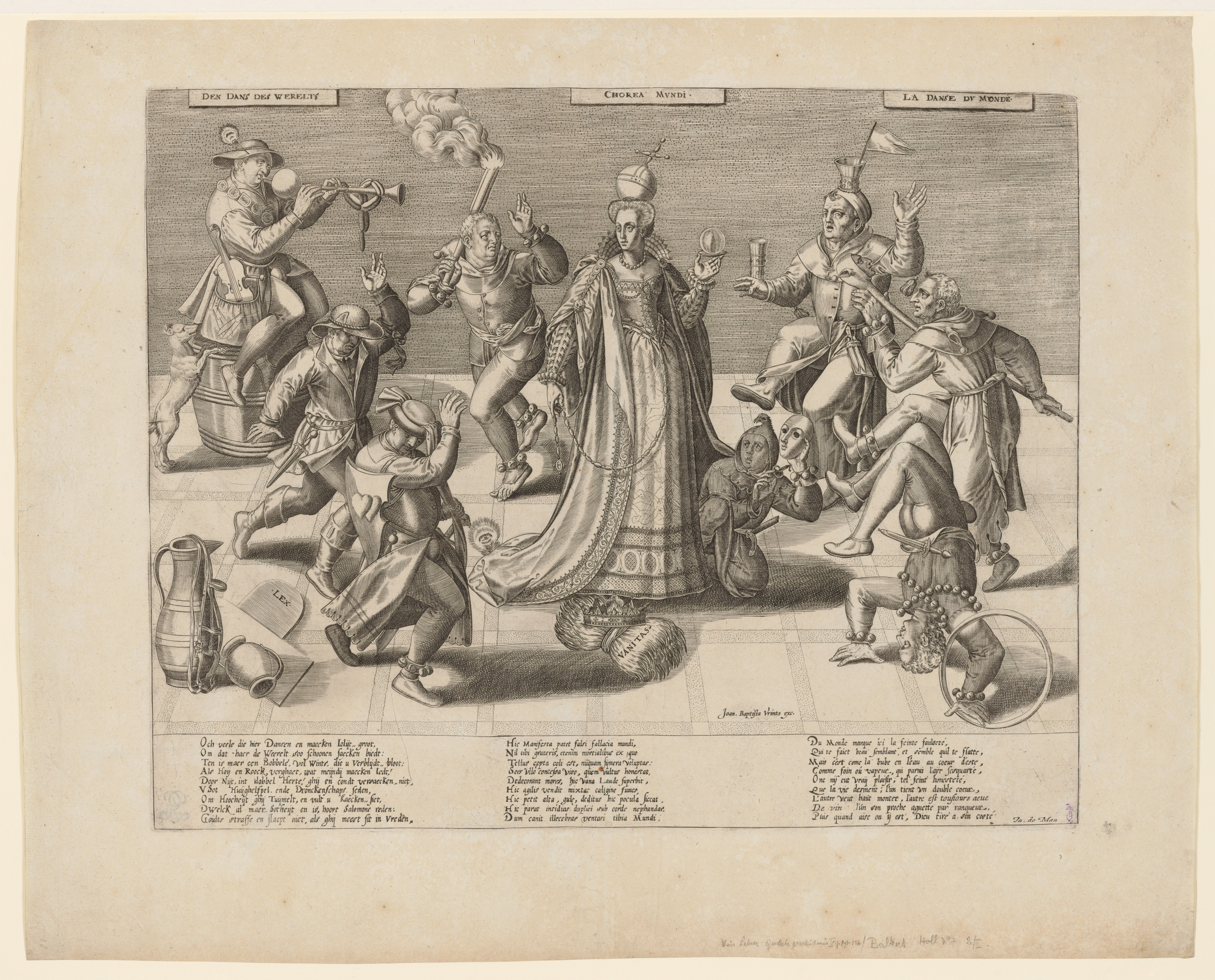
«Chorea Mundi – La Danse du Monde», Pieter Baltens zugeschrieben (c1526–1584, Antwerpen) © Metropolitan Museum of Art, New York
Martinskirche
Basel
Barfüsserkirche
Historisches Museum Basel
Dorfkirche Riehen