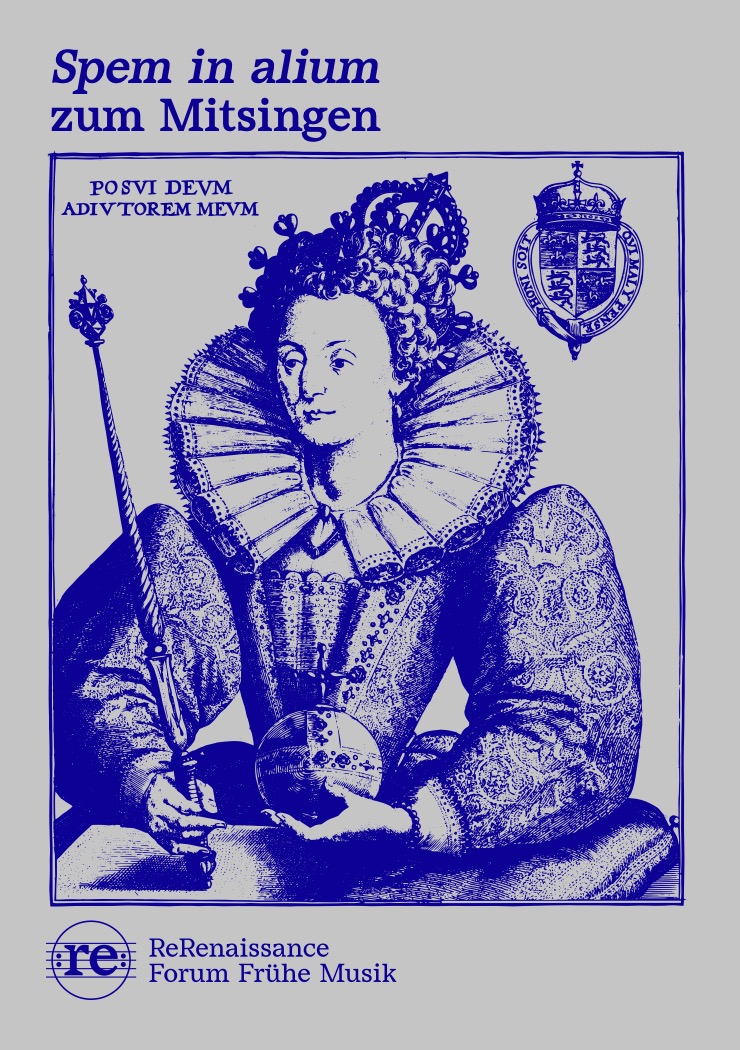
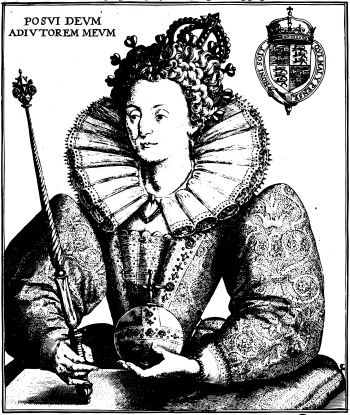
The reign of Queen Elizabeth I marked a golden age of English music. Choral music flourished both at the court’s Chapel Royal and in churches across the kingdom. Choirboys, professional singers, and composers worked side by side, creating a rich repertoire that is still admired today. Westminster was one of the country’s most important musical centres, where church choirs regularly joined together for major celebrations.
We continue that tradition. Together with our audience, we will perform one of the masterpieces of the Elizabethan era: Thomas Tallis’s Spem in alium. Written for eight choirs of five voices each, the work surrounds listeners with sound and remains one of the most extraordinary achievements of Renaissance music.
Annelise Ellars
Kaho Inoue
Dorothea Jakob
Tessa Roos
Guillaume Ribler
Marco Cassiano
Martin Kautzsch
Loïc Paulin
James Tomlinson
Kimon Barakos
Jedediah Allen
Josef Laming – organ
Grace Newcombe – artistic direction
You are warmly invited to take part in our free workshop choir and sing “Spem in alium” with us at the concert.
Please register using this link.
Main rehearsals:
Saturday, 24 October, 2:00–6:00 p.m.
Sunday, 25 October, 4:30–5:45 p.m.
Free admission – collection
I’ll be there
by David Fallows
I wrote about Tallis’s miraculous forty-voice motet Spem in alium earlier in the year. Today my mind is more on two other miraculous works in this concert, Jesus autem transiens and This is the record of John. The first, by Robert Wylkinson and the last piece copied into the Eton Choirbook, is a thirteen-voice canon with all voices at the same pitch and scrupulously avoiding any parallel fifths or octaves (just as in Spem in alium, but perhaps a harder task). The entries are marked for the twelve apostles, plus Jesus by implication for the first entry. I have never heard the piece: it seems to be the only complete work in the Eton Choirbook never to have been recorded.
I have loved This is the record of John by Orlando Gibbons ever since I first sang it at the age of 15. It sets the passage in John’s gospel when the Jews sent “priests and levites” to John asking who he was, to which he replied “I aaammmm not the Christ” with a magical melisma on ‘am’. Then they ask him if he was a prophet “and he answered: no” in abrupt single notes. Finally, they ask him who he is and he eventually rhapsodizes that he is a voice crying in the wilderness “make strait the way of the Lord”. These few words can hardly cover why this tiny verse anthem seems to me one of the most perfect compositions in the history of music. But I take great pleasure in inviting readers to share my joy. I’ll be there!
Kirche Reigoldswil &
Barfüsserkirche Basel
Barfüsserkirche
Historisches Museum Basel
Dorfkirche Riehen